
Adaptive Leadership

Ronald Heifetz and Donald Laurie describe the requirements to meet the challenges of changes in our work. These ideas are grounded from a business perspective and are readily translatable to healthcare. Increasing demands, reduced funding, increasing expectations, challenges with maintaining a workforce, growing populations, and emerging (and usually expensive) treatments and tools to name a few we face.
Adaptive work and leadership are essential in navigating these challenges, yet our current structures often fall short of enabling this. Successfully unearthing solutions in an ambiguous and unpredictable landscape demands a fresh perspective—one that shifts the traditional role of the all-knowing technical expert. It calls for leaders who are willing to embrace uncertainty and foster a collaborative environment, encouraging their teams to innovate and step into the uncertainty together.
In their work they describe six principles of adaptive leadership:
Get on the balcony
The ability to see the big picture with a delightful twist is truly a unique skill. It’s not just about keeping your eyes on the game; it’s about being able to seamlessly move back and forth between the action on the ground level and stepping up to the balcony vantage point. From there, you can gain invaluable insights into the broader trends, intriguing connections, and recurring themes that often shape our experiences and decision-making in healthcare.
Identify your adaptive challenge
Take a moment to truly know what is going on within your organisation and pinpoint where the necessary changes need to occur. It’s essential to look from many diverse perspectives and viewpoints to gather this crucial information. Don't limit yourself to only relying on the loud voices or the usual group of people you regularly meet and talk with. Instead, take the initiative to speak with people who have different experiences, backgrounds, and ideas. Their insights can provide you with a broader and deeper understanding that leads to meaningful transformation.
Regulate distress
Pace the work thoughtfully, allowing staff members to engage in debates about the various issues at hand and then provide clear, decisive direction. Maintain a sense of enough pressure to encourage continuous changes and improvements, but also allow ample time and space for everyone to let off some steam and decompress when needed. Balancing these elements can help foster a healthy and productive work environment.
Maintain disciplined action
Don't avoid or step into denial when getting to the chewy aspects of the change required. Deepen the debate to unlock what is below the surface. "No one learns anything without being open to contrasting points of view"
Give the work back to the people
"Everyone in the organisation has special access to information that comes from his or her particular vantage point". Leaders need to support rather than control, encourage risk-taking and responsibility, and then have their backs if mistakes are made. To help people recognise that they contain the solutions and that the leaders really do want to hear from them can be a massive shift to make for both the leaders and those who have the solutions.
Protect voices of leadership from below
Don't silence the creative deviants and those who expose things or make you feel uncomfortable. That perspective is exactly what you need. Ask more questions - what have we missed, what are they talking about? Shutting someone down who is courageous enough to tell it from their expert lens means you'll never hear from them again - and you need their wisdom.
Moving to an adaptive leadership approach is difficult for a couple of reasons. It requires you, me, the leader, to break from the long-standing habit of being in charge, that leadership is providing solutions. "Solutions to adaptive challenges do not reside with the leaders, but with the collective intelligence of employees at all levels, who need to use one another as resources, often across boundaries and learn their way to those solutions".
Secondly is tough because it's tough for those going through it. Everyone has to take on new roles, and responsibilities. It's not OK to just turn up, do your job and head home. New behaviours and approaches have to be taken on, the pressure of reality has to be felt and understood and the responsibility that everyone has a part to play has to be shared and owned.

Feeling overwhelmed, stuck, or unsure where to even begin? In this episode of The Leadership Lounge, Katie speaks directly to healthcare leaders who feel weighed down by responsibility and unable to see a way forward.
Instead of waiting for the perfect solution, Katie shares why the most powerful thing you can do is take one step—any step—different from yesterday. Whether it’s a small shift in your routine or a bold choice that changes your perspective, doing something different is the spark that creates momentum and hope.

In this episode of The Leadership Lounge, Katie explores what birds flying in V-formation can teach healthcare leaders about teamwork, resilience, and balance. In the realities of healthcare, where leaders and teams are stretched thin, often overwhelmed, and at risk of burnout what is there is learn and take from the natural world. You’ll take away practical insights on how to share the load, support colleagues through challenges, and build collective strength to sustain both wellbeing and impact.

Leadership isn’t about controlling everything; it’s about focusing on what matters. In this episode, I’m talking about how choosing your attitude and attending to the ‘boring magic’ can transform both your day and your team’s culture.

In this episode of The Leadership Lounge, I discuss navigating new job opportunities and career changes for healthcare leaders. I’ve got three steps that come up in all the conversations I have. Plus I’m starting to bring in insights from the book "10x is easier than 2x" about setting ambitious goals. This episode is all about encouraging self-reflection and offers practical prompts and resources to support you in your career transitions.

Leadership often demands both steady progress and bold reimagination. In this episode, Katie explores how healthcare leaders can manage overwhelm, challenge their thinking, and hold contradictions, from small steps to big leaps, all part of the path to meaningful growth.
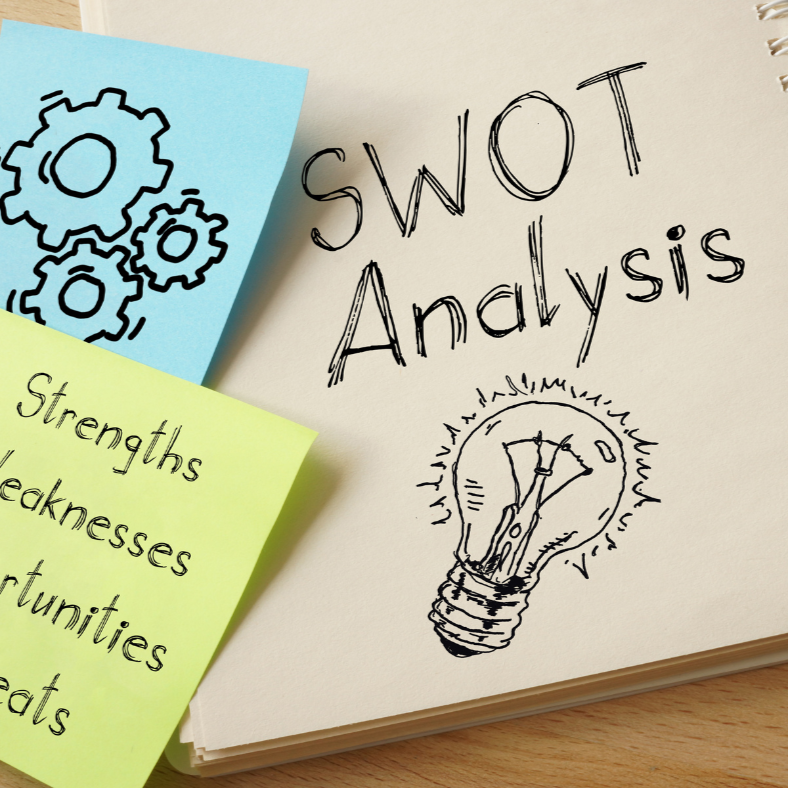
In the whirlwind of healthcare leadership, it can feel impossible to pause long enough to see the bigger picture. That’s where tools like SWOT and SOAR come in. In this episode of Katie’s Leadership Lounge, I’m looking at this classic framework, uncovering history, and showing how they can help leaders challenge assumptions, uncover blind spots, and move from firefighting to focused action.

Leading in healthcare isn’t a sprint with a clear endpoint, and there are moments when you can’t do everything and be everywhere, so you get to choose. In this reflective episode, I’m sharing what pausing, noticing, and being truly present can do for your leadership. Then we have practical tips on how you can create moments to ground and refocus yourself, all of which you can use in less than 30 seconds. This episode is your reminder that presence is a leadership strength.

Yes, an organisation and a boss have a responsibility to set you up for success. It might be training, definitely an orientation plan, maybe a mentor, and a reasonable, if not manageable, workload (I’ll pause while you all laugh).
You too have a role to play in setting yourself up for success. Getting the room ready for decorating and the walls ready for painting so the colour goes on well and evenly, so I can sit back and bask in the joy of a newly decorated and gorgeous room, is setting myself up for success.
It’s the same when you’re a leader.
This week, we’re into those foundations.

Starting with one idea, I found myself going in circles. With so much bad stuff going on in the world, who am I to talk about anything? Not to mention my ideas for sustainable leadership in healthcare. So I started with that, and came full circle, from Bittersweet to the Stockdale Paradox and a whole lot more in between.

We’re in the UK, and you’ll tell from the sound that my microphone isn’t. It’s been a wild ride and I’ve had many low points and bumpy stretches. I’m sure there are more to come. What then have been the practices that have stood the test and really helped me keep going?

This episode is for anyone who has ever left a team, a job, or a role, or supported someone else through it. I share what I’ve learned (and am still learning) about letting go, closure, grief, uncertainty, and grace.

With only two weeks till my big move, the period of Matarki and Midwinter has created a space of pause for me. So this week, I’m sharing a calm, reflective episode as this is a natural moment to reflect and take stock.

In this episode, we look at the difference between routines and habits and why that distinction matters for healthcare leaders under pressure. Drawing on practical examples and experience (including how a one-minute action can spark major change), I’m talking about how habits form the backbone of leadership identity. You'll hear how even in chaos, small, consistent actions build the leader you want to become.

Healthcare loves a crisis, but at what cost? What does it take to shift towards a more proactive way of working? This is where Habit 3 of the 7 Habits of Highly Effective People can help us….putting first things first.

As a slightly lost and overwhelmed charge nurse, I knew I wanted to be effective. I also knew that the skills I had learnt in the clinical setting needed to be expanded. Picking up a second-hand copy of the 7 Habits of Highly Effective People got me moving from chaos to clarity.

Joy in work is not a flaky, soft, fluffy thing to add on when you have the time or money to do so. Joy in work should be a right for everyone who is committing themselves to the work and leadership in healthcare.
This week we looking at the basis for why joy in work is needed in healthcare right now, what are steps you can take tomorrow and how when you make this choice you can lift the spirits of the humans around you.

If I'm feeling everything all at once, then the emotional workload of healthcare is a good practice ground. This week, we're talking about managing when all unwanted and wanted emotions come up. We'll discuss what this means for you as a leader and share tips and ideas from the experts in this field.

This episode isn’t polished (like it ever is), it’s personal. This week, I’m sharing what many leaders are too scared to say out loud—what it’s like to be accused of bullying, and what it feels like to be on the receiving end.

As Star Wars fans celebrate May the 4th, we’re kicking off season 4, reflecting on the stories that shape us.
Star Wars was a big childhood influence that I’ve carried with me into my work and my leadership. Knowing ‘I’m no Jedi but I know the force’ is about saying that I don’t have all the answers, but I know these conversations matter. And along the way, I’ll have a few things to share with you that will help, support and encourage you.
If you’ve ever felt like you should know more as a leader, this episode is a permission slip to lead with curiosity and courage instead.

A brief mid-week arrival, confessing my lack of planning and wrapping up season 3.
Of course, I share what I did when I noticed that I’d ‘forgotten’ it was Easter. In this episode, I’m sharing a way to get a handle on things beyond today’s urgent crisis or deadline.

This episode isn’t about pretending things aren’t tough—it’s about the power of noticing how you think, and choosing to lead with clarity and impact anyway. We explore the Abundance Mindset and how it supports stronger, more intentional leadership—even in stretched systems

Behind every episode of The Leadership Lounge is a deeper reason for showing up. Hitting the 50-episode mark felt like the right time to pause and reflect—not just on the podcast, but on this leadership thing. Every leadership journey starts somewhere—but what keeps it going? In this episode, I share three key reflections that have shaped both the podcast and my own leadership: getting clear on your why, showing up with persistence (especially on the tough days), and staying adaptable as things around you change.

Every day, healthcare teams work together—but are they cooperating or collaborating? And does it matter? In this episode, we explore the key differences, when to use each approach, and why shared purpose is the glue that makes both work. Whether you're a new charge nurse leading a team or a seasoned leader looking to foster deeper collaboration, this conversation will give you practical insights to build trust, alignment, and impact.

Stepping into a leadership role is like jumping onto a fast-moving treadmill—you’re expected to get up to speed quickly while making decisions, managing people, and finding your footing. If you are leading leaders, you play a critical role in ensuring new team leaders don’t just survive but thrive. In this episode, we break down three foundational moves that will set them up for success.

What if kindness wasn’t just a personal trait but a powerful force for transforming healthcare? I dive into Intelligent Kindness, a concept that shifts kindness from being seen as ‘soft’ to a strategic approach for stronger teams, better patient care, and a healthier system. From tackling self-doubt to building trust and therapeutic alliances, this episode offers a fresh perspective on why kindness—when applied intelligently—is anything but soft.

Tackling a challenge can feel overwhelming, but the key is to start right and stay the course. In this short episode, I share a simple yet powerful four-step framework: It’s about clarity, curiosity, and the grit to see things through. A short and practical listen for leaders in the thick of it!

What happens when staff are afraid to speak up? Healthcare teams struggle with stress, turnover, and burnout—but when psychological safety is strong, collaboration, learning, and performance thrive. In this episode, we break down what psychological safety is, the stories of where it started and the impacts when you have it, and what happens when you don’t. If you care about retention, resilience, and results, this is for you.

Healthcare leaders are being asked to do the impossible. So, how do we make the work achievable? In this episode, we talk about the courage it takes to prioritise and how we talk risk when setting those priorities.

Your environment influences more than just your workflow—it affects how you feel, how you lead, and even how others perceive you. Rabbit holes aside, an organised and decluttered workspace helps your focus and reduces frustration. Taking some of the hard work of what is often hard work.
In short, your workspace isn’t just where you work—it’s how you work. In this episode, I’m sharing ideas and stories to give you a fresh perspective on how you can support your energy, and effectiveness by looking at the physical environment you are in.

Frustration, burnout, feeling like something is off—these emotions don’t just come from the workload or the people around us. Often, they’re a signal of a deeper misalignment with our core values. If you don’t have clarity on what truly matters to you, decision-making becomes harder, confidence wavers, and tough situations feel even heavier. In this episode, I explore how understanding your values gives you the power to make better choices, feel more grounded, and lead with confidence—even in challenging environments.